

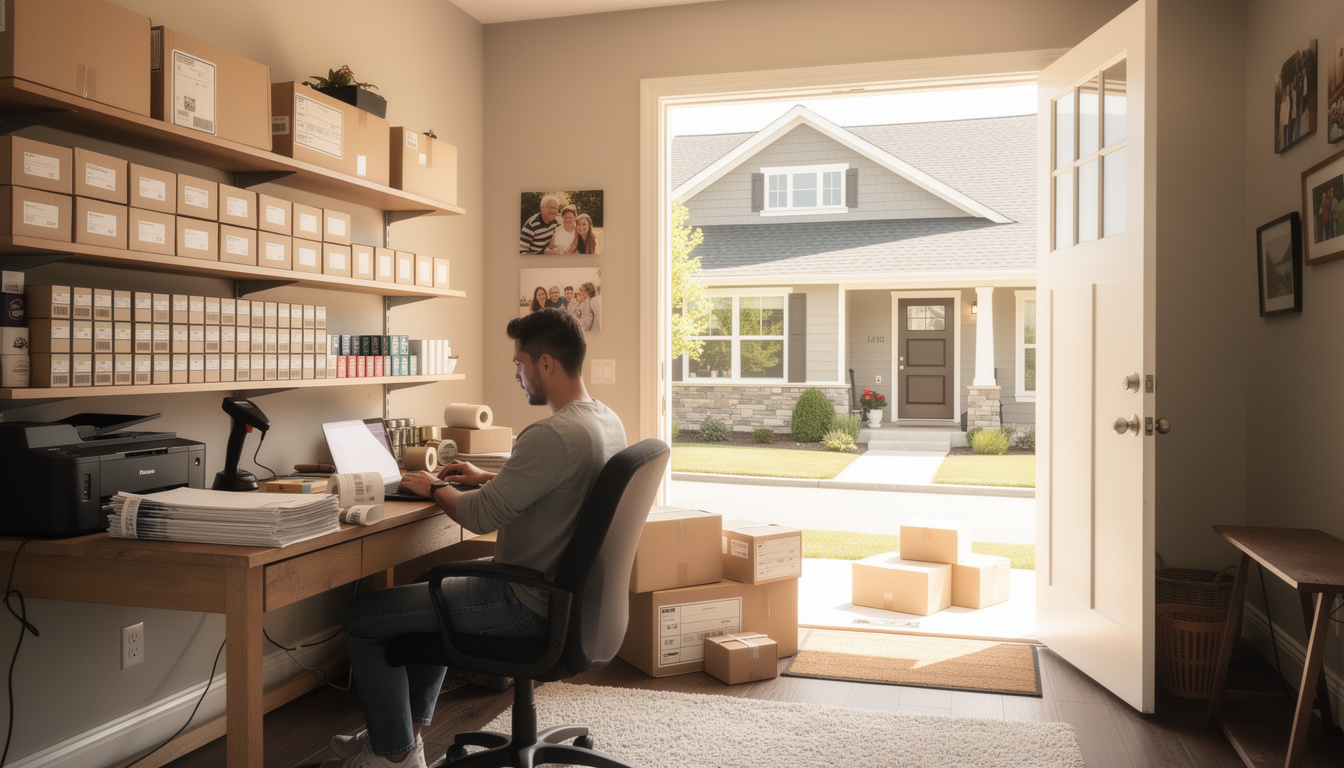
You start a home-based business to cut overhead, keep control, and work on your own terms. Then a client slips on your porch, a laptop disappears, or a storm ruins your inventory. Your homeowner policy feels like the obvious safety net, yet it is built to protect a household, not a small business. The result is predictable: insurance gaps show up when you need the claim paid, not when you read your declarations page.
To make this real, follow “Maya,” a freelance tax preparer who meets clients in a spare room. She assumed her homeowner policy covered “anything in the house.” After a client tripped over a package in the entryway, the claim turned into a liability dispute tied to business activity. Maya learned the hard way that business coverage rules change once money changes hands at home. If you earn income where you live, you face business interruption exposure, property protection limits, and liability exclusions. Home-based business insurance exists to close those risks before they become personal debt.
Home-based business insurance vs homeowner policy: the core mismatch
A homeowner policy protects your dwelling and personal belongings, not your business operations. It often includes a small allowance for business property, yet the cap is commonly around $2,500 for business belongings stored at home. If you run a small business with laptops, cameras, tools, or inventory, that cap fails fast.
Home-based business insurance is designed for business coverage, so it treats your equipment and operations as the main exposure. The argument is simple: if your income depends on the items and activities in your home office, your protection must match your risk. This is the first place insurance gaps appear.
Homeowner policy limits on business coverage create insurance gaps
Most homeowner policy forms exclude or restrict claims tied to business activity. Insurers draw a line between personal life and revenue-driven work because the risks differ. When a claim touches sales, client visits, or paid services, you often hit exclusions or narrow sub-limits.
If you store inventory, ship products daily, or keep higher-value gear at home, your business coverage needs to move beyond a personal policy. Your homeowner policy was priced for personal risks, so it is not priced or written for the risks of a small business. This is why home-based business insurance matters.
Liability risks: why a homeowner policy often fails home-based business owners
Liability is the fast route from a minor accident to a major expense. If a client, courier, or vendor gets hurt during a business visit, your homeowner policy often refuses the claim because the injury is linked to business activity. Medical bills plus legal defense costs can reach thousands of dollars before any settlement discussion starts.
Maya’s case is common for consultants, tax preparers, tutors, and home daycare operators. You bring people onto the property for work, so the risks shift. Home-based business insurance addresses liability as business coverage, not as an exception buried in the homeowner policy.
Property protection gaps: equipment, inventory, and off-premises work
Property protection is not only about a fire or theft. It is also about how the policy classifies your items. A homeowner policy often treats business gear as limited, even if the same type of item is fully covered when it is “personal.”
Consider a photographer who stores lenses, lighting, and drones at home. A single theft can exceed the business property cap, leaving you to replace tools out of pocket. If you want a deeper look at commercial property angles, read how commercial property insurance protects your business to see how business coverage differs from home coverage.
Business interruption: the missing piece in many homeowner policy setups
Business interruption coverage replaces income when a covered loss stops your operations. A homeowner policy focuses on making the household livable again, not keeping a small business operating. If a kitchen fire makes your home office unusable for weeks, your homeowner policy may pay for repairs and temporary housing, yet not for lost revenue.
Home-based business insurance, an in-home business policy, or a BOP often includes business interruption. This matters when your pipeline depends on uptime, deadlines, and client trust. If you miss filing dates, shipping windows, or booked sessions, the real loss is income, not drywall.
Home-based business insurance options that close homeowner policy insurance gaps
You have three common paths, and the right choice depends on your risks, foot traffic, equipment value, and revenue. The key is to choose business coverage that matches the way your small business runs day to day. If you want a step-by-step match to your profile, use this guide on choosing the right insurance for your home-based business.
- Home business endorsement: Adds business coverage to your homeowner policy for business property and some liability. It helps, yet it still has limits for larger operations and higher-risk work.
- In-home business policy: Built for home-based business insurance needs, often adding stronger property protection, liability, business interruption, and sometimes data breach help.
- Business Owner’s Policy (BOP): Bundles commercial property, general liability, and business interruption into one package. It fits many small business owners with more gear, more client interaction, or higher revenue stakes.
This is a decision about risk control, not paperwork. If your homeowner policy was never designed to defend a business claim, adding business coverage is the rational move.
Case study: home-based business insurance after a client injury claim
Maya updated her setup after the fall incident. She added a policy built for home-based business insurance, increased property protection for client files and office equipment, and tightened visitor procedures. The most important change was liability protection tied to her paid services, not to personal life.
She also created a simple “walkway check” routine before appointments. The lesson is not about being fearful. It is about accepting that risks rise when you invite the public into your home for business and relying on a homeowner policy is a weak strategy.
Costs in 2026: what home-based business insurance often looks like
Pricing depends on your state, industry, revenue, and claims history. Many small business owners see general liability costs in the range of $200 to $1,000 per year, with monthly premiums often around $15 to $85 for basic setups. A BOP is often reported around $57 per month on average in published market estimates, though real quotes vary by class and limits.
The argument for business coverage is not “cheap insurance.” It is cost compared to loss. One liability claim or a single equipment loss can wipe out multiple years of premiums, while a homeowner policy can leave those insurance gaps intact.
Our opinion
Home-based business insurance is not optional if your homeowner policy leaves business coverage, liability, property protection, and business interruption exposed. The logic is consistent: you run a small business, so you insure it like a business. When you rely on a homeowner policy, you accept insurance gaps by default.
Use your risks as the decision tool. Do you host clients, hold inventory, rely on expensive gear, or need consistent uptime to get paid. If yes, share your setup and the risks you face, then compare business coverage options before the next claim forces the decision for you.
Does a homeowner policy cover a home-based business insurance claim?
A homeowner policy usually excludes or limits business coverage, so a home-based business insurance claim tied to business activity often exposes insurance gaps in liability and property protection.
Why is liability a bigger issue for home-based business insurance than for a homeowner policy?
Liability claims often involve clients or deliveries connected to paid work. A homeowner policy often rejects business-related liability, while home-based business insurance treats those risks as the core exposure.
How does business interruption fit into home-based business insurance?
Business interruption replaces income after a covered loss stops your small business from operating. A homeowner policy focuses on the home, so home-based business insurance is the usual path for business interruption coverage.
What business coverage option works best if my home-based business has clients visiting?
If your home-based business has foot traffic, you need stronger business coverage for liability and property protection. Many owners choose an in-home business policy or a BOP because a homeowner policy endorsement often leaves insurance gaps.
Is home-based business insurance worth it if I only have a laptop and no inventory?
Even with minimal property protection needs, liability and business interruption still matter for a small business. Home-based business insurance addresses those risks more directly than a homeowner policy, which often limits business coverage.