

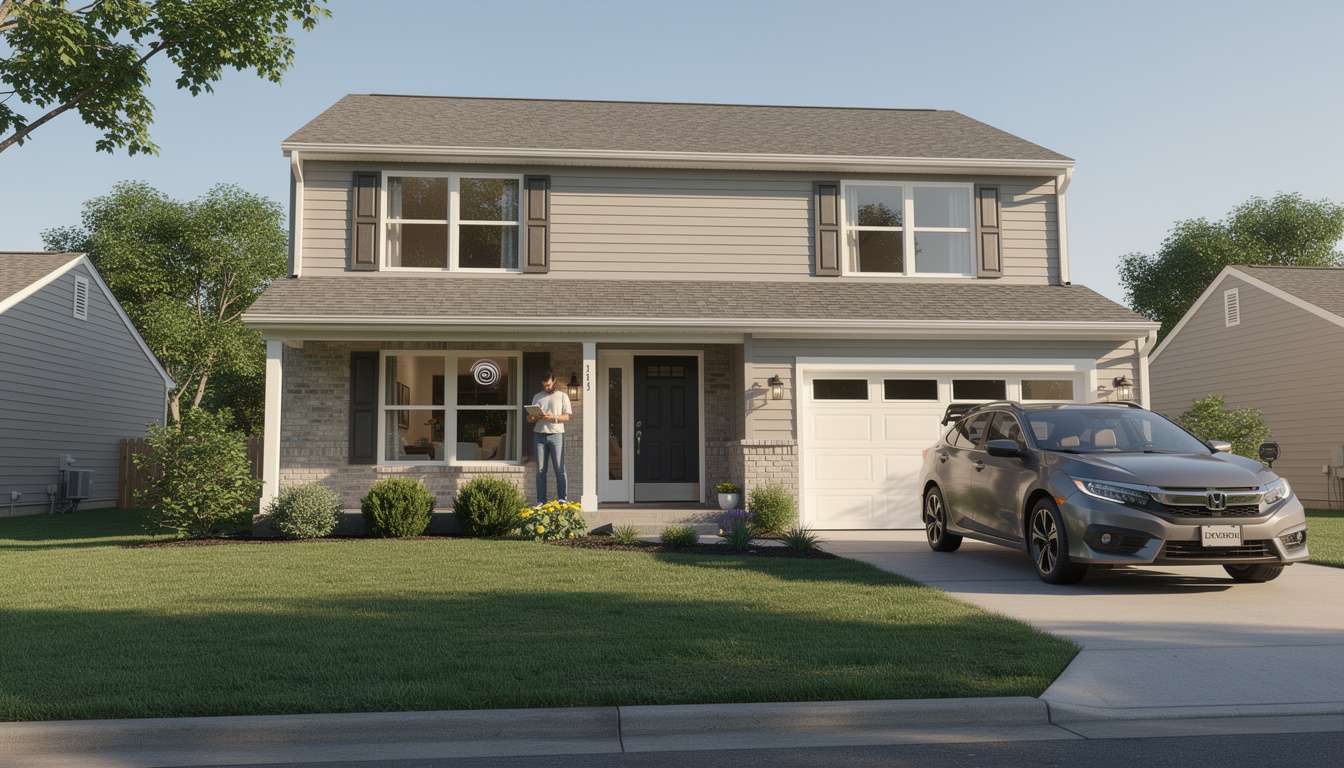
$2,500 is the number that catches a lot of remote workers too late. That’s a common cap for business property kept at home under a standard homeowners policy, which means a laptop-and-monitor setup can outgrow coverage faster than people think. If your policy has been renewing on autopilot while you remodeled a kitchen, replaced a roof, added a teen driver, or started driving for delivery apps, you’re the reader for this. Maya learned that the expensive part wasn’t the premium increase. It was finding out her coverage assumptions were old.
Insurers like State Farm, Allstate, Travelers, Liberty Mutual, GEICO, Progressive, and USAA will all happily renew a policy that no longer fits your life. Renewal is an administrative event, not a quality check. If your house, car, job, or household changed, your policy needs to change too.
What changed since your last renewal?
Start there. Not with a definition, and not with whatever your declarations page said last year.
The fastest way to create a coverage gap is to assume your insurer “kept up” because the policy kept renewing. Maya had a kitchen remodel, a home office setup, and a 16-year-old added to the family auto policy. None of those changes fixes itself inside an insurance file unless someone updates it.
- Home changes: renovations, roof replacement, additions, new plumbing, water-leak sensors
- Life changes: marriage, divorce, a new baby, relatives moving in or out
- High-value purchases: jewelry, watches, art, collectibles that may need scheduling
- Work changes: remote work equipment that can run past standard policy limits
- Auto changes: a new car, a teen driver, a move, or a different commute pattern
- Cost changes: rebuilding materials and repair labor rising in many regions
Homeowners make one mistake over and over: they confuse market value with rebuild cost. Those are not the same number. Your dwelling limit should be built around what it would cost to reconstruct the structure with current labor and materials, not what you paid for the house or what Zillow says this week.
If weather risk is part of the picture, deductible structure matters too. Wind, hail, and named-storm deductibles can work very differently from a flat homeowners deductible, depending on the state and the policy form. Florida deserves extra scrutiny because storm-related cost pressure and policy language can make a cheap-looking quote age badly.
Home upgrades can cut risk, but only if the carrier re-rates them
Some upgrades lower the chance of a loss and can trim premiums. Water-leak detection is the cleanest example. A sensor won’t stop every burst pipe, but insurers like Travelers, Nationwide, Amica, and Erie often price prevention better than they price repairs after the fact.
Maya installed a leak detector after a neighbor’s pipe burst led to weeks of repairs. Smart move. But the discount doesn’t appear by magic. You need documentation, and you need the insurer to re-rate the policy. Otherwise it’s just a safer house with the old premium still attached.
The remote-work limit that fails fast
That $2,500 business-property cap is fine for one basic laptop. Add a second monitor, dock, camera, microphone, external drive, and printer, and you’re already testing the limit. If you run a side business from home, the gap gets wider because standard homeowners forms were never built to insure a small commercial operation in any serious way.
List the gear. Price it. Then ask what the policy would pay for theft, fire, or a power-surge loss. If the answer is still around $2,500, don’t pretend that’s enough because the monthly premium feels low. Cheap coverage that excludes your real setup is just a delayed bill.
High-value items create the same problem. Jewelry, watches, art, and collectibles often run into sub-limits unless you schedule them separately. Maya’s engagement ring upgrade and inherited art piece pushed her past what a standard policy would comfortably pay without itemizing them.
Auto insurance at the state minimum is a bad bet
A teen driver can blow up a premium. That’s not the worst part. The bigger issue is that many households keep liability limits that were already too low before the teen got added.
This is where shoppers get sold the wrong product. GEICO, Progressive, State Farm, Allstate, Farmers, and Liberty Mutual all compete hard on price, and low limits make quotes look better. But state minimum liability is often nowhere near enough if you have savings, a house, or wages worth garnishing.
| State | Bodily injury/property damage minimum |
|---|---|
| Florida | 10/20/10 |
| Many states | 25/50/25 |
Florida is the glaring example because 10/20/10 is thin coverage in any serious crash. In many other states, 25/50/25 is the common floor. That still isn’t enough for a household with assets. A single accident can run past those numbers fast once medical bills, lost wages, and legal costs land in the claim.
Pick deductibles by cash flow, not optimism
Most people choose deductibles backward. They pick the number that looks comfortable on a quote page, then discover they can’t actually pay it the same week a claim happens.
A realistic collision or comprehensive deductible is often $500 or $1,000. Either can work. The right one is the amount you can pay without missing mortgage, rent, utilities, or credit-card bills while the car sits in a shop. If $1,000 would force you onto a payment plan, it’s too high, even if it trims the premium.
Liability matters more than deductible games. That’s the editorial line here, and the math supports it. Saving a modest amount per month by carrying low liability limits is not smart if one at-fault crash can expose your bank account and future income.
Driving for income changes the policy language
Personal auto insurance is priced for personal use. Once you mix in rideshare, delivery, or app-based driving, the claim can get messy if the policy excludes that use. People learn this after a loss because the car was technically insured, just not for the way it was being used.
Check the policy before you assume your personal coverage extends to paid driving. Progressive, Allstate, Farmers, and State Farm offer rideshare options in many markets, while availability and terms vary by state. If you’re switching between commuting and part-time gig work, that needs to show up on the policy, not just in your budget spreadsheet.
Location matters too. California, Hawaii, Massachusetts, and Michigan restrict or ban the use of credit scoring in auto insurance in different ways, and Washington has also banned it. So if a carrier gives you a dramatically better quote in one state than another, the rating inputs may be changing more than your driving record.
Check these line items before the next bill hits
Before renewal, pull the declarations page and verify four things:
- Dwelling coverage reflects rebuild cost, not market value
- Home office and business-property limits aren’t stuck around $2,500 if your setup exceeds that
- Auto liability isn’t parked at 10/20/10 or 25/50/25 just because that’s the legal minimum
- Collision and comprehensive deductibles match what you can actually pay this month, not in some better month
Then call the insurer and ask one direct question: “What changed on my premium because my risk changed, and what changed because rates went up?” If the answer is vague, get fresh quotes from at least three carriers such as GEICO, Progressive, State Farm, Travelers, USAA, or Erie before you renew.
Nothing in this article is personalized insurance advice. State laws, policy language, and your own risk profile matter. Before you buy, bind, or cancel a policy, talk to a licensed agent or independent broker in your state.