

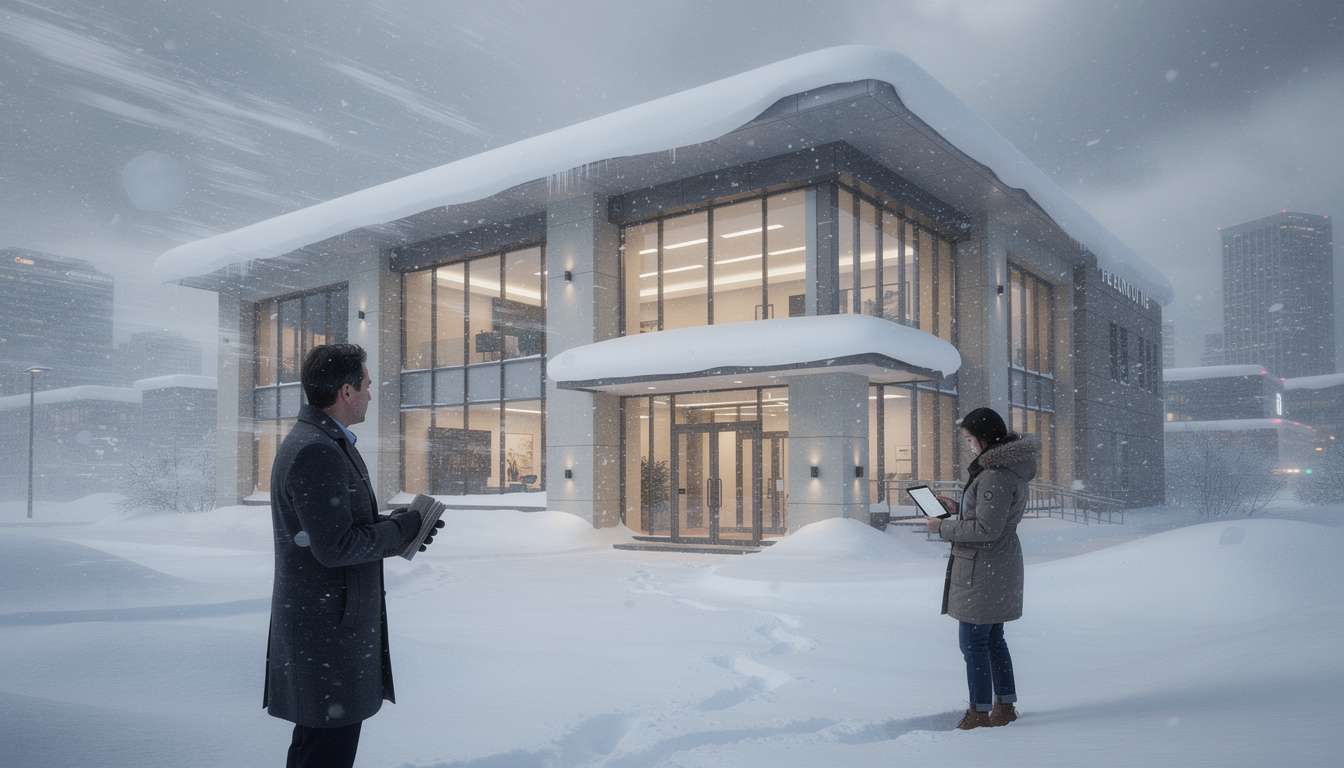
$1,000 is a common commercial property deductible, and it feels manageable right up until a roof leak, a burst pipe, and a two-day closure land in the same week. If you’ve ever assumed “winter weather” is automatically covered, read the policy again. Small business owners get burned here because snow losses are usually covered only when the trigger fits the form and the carrier doesn’t pin the damage on maintenance. This is for the owner comparing quotes from Travelers, Liberty Mutual, Nationwide, The Hartford, State Farm, or Farmers and trying to figure out what actually pays when snow stops the business cold.
Snow isn’t a quirky seasonal nuisance. It’s a chain reaction: roof load, ice dams, frozen plumbing, blocked entrances, delivery delays, slip-and-fall claims, and lost revenue while the lights are still on and payroll is still due. If your policy has the wrong limits, the wrong endorsements, or a deductible you picked just to cut premium, winter turns a routine claim into a cash-flow problem fast.
Where snow losses usually hit first
Most businesses don’t get wrecked by one cinematic blizzard moment. They get hit by boring damage that adds up. Water gets in after snow buildup. Pipes freeze overnight. A parking lot ices over before opening. A contractor misses a plow visit, and a customer goes down at the entrance.
Commercial property insurance is usually the first place the claim starts. In a standard setup, it can cover direct physical loss to the building, equipment, furniture, and inventory when snow, ice, or freezing causes damage. That can include roof damage from snow load, water damage tied to ice buildup, and burst pipes after a freeze.
The ugly part is the exclusion fight. Carriers often pay weather damage and deny poor upkeep. If a roof was already failing, if gutters were neglected, or if the building wasn’t heated enough to protect plumbing, expect questions. This is where policy language matters more than the sales pitch. Travelers, Liberty Mutual, Nationwide, and Farmers all write commercial property, but no insurer turns bad maintenance into a covered cause of loss because it snowed.
Roof leaks and frozen pipes aren’t treated the same way
A burst pipe claim often turns on whether you took reasonable steps to maintain heat or drain the system. Roof claims can hinge on prior wear, drainage problems, or how the water entered. Owners tend to lump all winter damage together. Adjusters don’t.
If your building limit hasn’t kept up with replacement cost, snow exposes that fast. A policy that looked cheap in July can leave you underinsured in January when material and labor costs spike after a regional storm.
Business interruption coverage is the difference between damage and a cash crisis
If snow damages the premises badly enough that you can’t operate, business interruption insurance can replace lost income and help cover ongoing expenses such as rent, payroll, and utilities. For a retailer, restaurant, contractor, or service business, that part of the policy often matters as much as the property claim itself.
Plenty of owners still buy property coverage and skimp on income protection. That’s a mistake. A two- or three-day shutdown can be survivable. A longer closure with payroll, rent, spoiled stock, and delayed jobs can punch far above the repair bill. Some forms also include extra expense coverage for temporary relocation, emergency workarounds, or other costs that keep the business running.
Don’t assume every snow closure triggers payment. Business interruption usually requires a covered cause of loss that makes the premises unusable. If roads are bad and customers stay home, but your building never suffered covered damage, payment is less likely. That’s the distinction owners miss when they hear “weather closure” and think the policy will backfill revenue automatically.
| Coverage area | What it can pay for |
|---|---|
| commercial property | building repairs, equipment, inventory, furnishings after covered snow, ice, or freezing damage |
| business interruption | lost income, rent, payroll, utilities when a covered event makes the premises unusable |
| extra expense | temporary relocation, emergency repairs, alternate operating arrangements |
Slip-and-fall claims get expensive faster than most owners expect
Snow and ice create liability exposure the minute a customer, vendor, or visitor steps onto your property. General liability insurance is what stands between a winter injury claim and your operating account. Medical bills, legal fees, and settlements add up fast, and defense costs don’t disappear just because the claim is weak.
This is where being cheap on liability limits is hard to defend. State minimum thinking belongs in personal auto, and it’s bad there too. For a business with foot traffic, loading areas, or public entrances, bare-bones limits are asking for trouble. State Farm, Nationwide, Liberty Mutual, and Travelers all sell general liability, but none of them will make a neglected icy walkway look reasonable after the fact.
You still have to do the work. Insurance doesn’t replace snow removal logs, salting records, vendor contracts, and staff procedures. If someone falls, those records help show you took reasonable steps to deal with the hazard. Without them, the claim gets uglier.
Workers’ comp is separate, and in Texas the rule changes
When an employee gets hurt in snowy or icy conditions while working, workers’ compensation usually handles medical expenses, rehabilitation costs, and lost wages. That matters for outdoor crews, drivers, property staff, and anyone moving between sites in bad conditions.
Texas is the exception worth flagging because workers’ comp is generally optional there for many private employers. In most other states, skipping it isn’t a real option. If your business operates across state lines, don’t assume one rule follows you everywhere.
Fleet vehicles and delivery exposure get worse in winter
Businesses that put vehicles on the road during snow season need more than a generic auto policy and good intentions. Commercial auto insurance covers vehicle damage, liability, and medical costs after winter crashes, and claim severity rises when roads are slick and pileups involve several vehicles.
This matters for delivery businesses, contractors, sales teams, and service companies with vans or trucks on the road every day. If you carry only low liability limits to save premium, a single bad winter loss can wipe out that savings many times over. GEICO, Progressive, Travelers, and Nationwide all write commercial auto in many markets, but the right question isn’t who has the cleverest ad. It’s whether your liability limit, physical damage coverage, hired and non-owned auto exposure, and deductible fit the way you actually operate.
A lot of owners focus on the truck and ignore the downtime. If a revenue-producing vehicle is out of service after a snow crash, the lost jobs and missed deliveries can hurt as much as the repair bill.
| Common winter exposure | Policy that usually responds |
|---|---|
| roof damage from snow load | commercial property |
| burst pipes after freezing | commercial property |
| customer slip on icy entrance | general liability |
| employee fall on the job | workers’ compensation |
| company vehicle crash in snow | commercial auto |
| temporary shutdown after covered damage | business interruption |
What to check before the first storm, not after
Winter isn’t the time to learn your deductible, your sublimits, or the wording around freezing losses. Review the declarations page and the actual form before the first storm warning. If your business has grown, moved, added equipment, or taken on more vehicles, last year’s limits may already be stale.
- Check the building limit, business personal property limit, and deductible, often $1,000, $2,500, or $5,000 for small commercial accounts.
- Confirm whether business interruption and extra expense are included, and how coverage starts after a covered loss.
- Review liability limits for customer-facing locations, plus workers’ comp and commercial auto for winter driving exposure.
- Read the freezing and maintenance language so you know what the carrier can challenge after a pipe burst or roof leak.
If you’re comparing carriers, don’t shop by premium alone. A cheaper quote from one insurer can hide a higher deductible, thinner income coverage, or exclusions that only show up when snow actually hits. That’s why a “savings” of 15% on premium can be a bad deal if it comes with a deductible jump from $1,000 to $5,000 or weaker income protection.
Pull out your declarations page today and verify three items before winter weather starts: your property deductible, whether business interruption is listed, and the liability limit for customer injuries on your premises. Nothing in this article is personalized insurance advice. State laws, policy language, and your own risk profile matter. Before you buy, bind, or cancel a policy, talk to a licensed agent or independent broker in your state.