

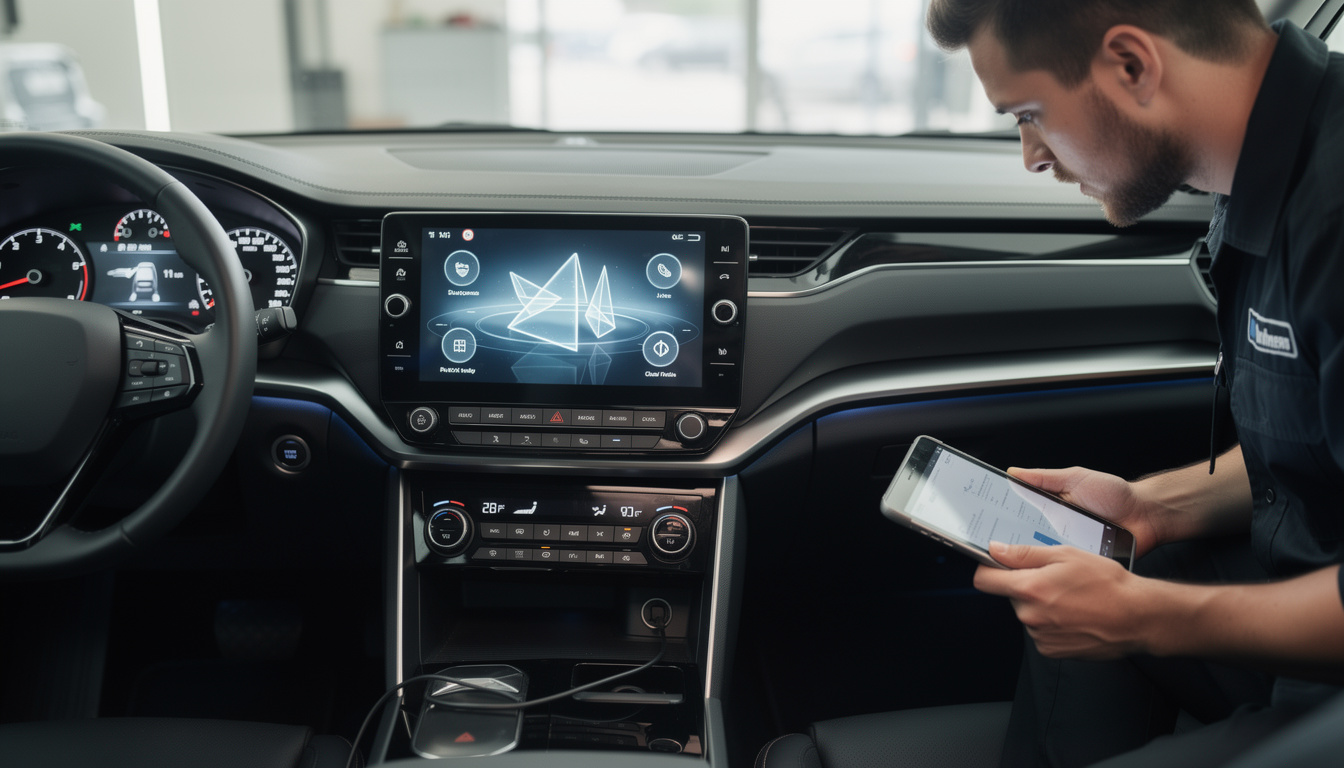
A replacement digital instrument cluster can run $1,500 to $4,000. A center infotainment screen tied to climate controls, backup cameras, and driver-assistance features can push the bill past $5,000 once calibration and labor are added. That’s why drivers shopping comprehensive auto insurance need a better answer than “it depends” when they ask whether a high-tech dashboard is covered.
For owners of newer Hondas, Teslas, Fords, BMWs, Hyundais, and GM vehicles packed with sensors and displays, the real question isn’t whether technology in cars is expensive. It is. The question is what kind of loss caused the damage. If your digital panel dies after a crash, one part of your policy may respond. If a power surge, theft attempt, vandalism, falling tree branch, flood, or fire wipes out your vehicle electronics, comprehensive coverage is often the piece that matters. The ugly surprise is that many drivers assume any dashboard repairs are “electrical” and therefore excluded. That’s too simplistic, and it leads to bad claim decisions, bad deductible choices, and sometimes bad cars to own once they age out of warranty.
When comprehensive auto insurance covers high-tech dashboard damage
Comprehensive auto insurance usually covers a high-tech dashboard when the damage comes from a non-collision event. Think theft, attempted theft, vandalism, hail, flood, fire, falling objects, animal damage, or glass-related incidents that trigger broader interior damage. If someone smashes a window and rips out your infotainment unit, that is the classic comprehensive claim. If a storm sends water into the cabin and shorts the digital display, that can also fall under comprehensive, subject to policy language and the insurer’s inspection.
The cause of loss matters more than the part itself. A dashboard packed with touchscreens, HUD components, sensors, and integrated safety controls doesn’t lose coverage because it’s fancy. It loses coverage if the breakdown looks like wear and tear, a mechanical failure, a manufacturer defect, or gradual deterioration. That distinction is where many auto insurance claim disputes start.
Progressive, GEICO, State Farm, Liberty Mutual, and Travelers generally frame comprehensive in similar ways: damage from events other than collision. The big differences are deductible options, OEM parts language, claims handling, and how aggressively they investigate electronics failures that could also be blamed on age or defect. If your insurer can trace the loss to water intrusion after a storm, vandalism, or theft, your odds improve fast.
A practical detail buyers miss: your insurer won’t treat every dead screen as sudden digital dashboard damage. If the failure log shows prior glitches, moisture over months, or a battery-voltage issue tied to neglected maintenance, the claim can get denied.
If you’re sorting out whether the damage belongs under comprehensive or collision, it helps to understand how policy buckets work before you call the adjuster. A quick read on how auto insurance coverage actually pays after a loss can save you from describing the event in a way that creates confusion.
Covered causes that often trigger insurance for dashboard repairs
These are the fact patterns most likely to support insurance for dashboard and connected electronics:
-
A thief breaks in and steals the factory screen, navigation unit, or steering-column electronics.
-
Vandals crack the display, pour liquid into vents, or damage the center console.
-
Floodwater reaches wiring harnesses, modules, or the digital cluster.
-
A fire starts under the dash or spreads into the cabin.
-
A tree limb or hail strike damages the windshield and sends debris into the dashboard assembly.
-
Rodents chew wiring behind the instrument panel; many comprehensive policies treat animal damage as covered.
One sharp point here: rodent damage is one of the stranger but more useful features of comprehensive coverage. Drivers laugh at it until a mouse turns soy-based wire insulation into lunch and the repair estimate lands near $2,200.
What comprehensive car insurance coverage does not pay for
The exclusions are where expensive misunderstandings happen. Comprehensive coverage is not a maintenance contract for vehicle electronics. If your touchscreen flickers, freezes, or goes black because the module failed on its own, that’s usually a warranty issue or an out-of-pocket repair. The same goes for worn connectors, software glitches, dead pixels, corrosion that built up over time, and manufacturer defects.
This is also where dealers and service writers muddy the water. They’ll often describe a failed screen as “sudden” because it stopped working yesterday. Insurers care about the cause, not when you noticed it. A sudden symptom doesn’t turn wear into a covered peril.
Collision is another dividing line. If you rear-end another car and the impact cracks the digital cluster or dislodges the infotainment unit, that falls under collision coverage, not comprehensive. Drivers who carry liability plus comprehensive but skip collision to save money can get caught here. They assume the dashboard is “inside the car” and therefore somehow different. It isn’t.
There’s another bad assumption worth killing off: aftermarket upgrades don’t always get full reimbursement. If you added a premium head unit, custom gauges, or integrated camera displays after purchase, your base policy may cap what it pays unless you bought extra custom equipment coverage.
| Cause of dashboard damage | Usually covered? | Typical policy bucket | Common problem |
|---|---|---|---|
| Theft of infotainment screen | Yes | Comprehensive | Deductible may erase smaller payouts |
| Flooded cabin shorts digital cluster | Usually yes | Comprehensive | Insurer may investigate prior water intrusion |
| Crash cracks display and sensors | Yes, if carried | Collision | No payment if you dropped collision |
| Screen fails from internal defect | No | Warranty or owner expense | Often mistaken for insured loss |
| Gradual corrosion in wiring | No | Maintenance issue | Hard denial under wear-and-tear exclusion |
| Rodents chew dashboard wiring | Often yes | Comprehensive | Need photos and repair teardown evidence |
Drivers comparing broad policy options should also look at how deductibles change what is worth claiming. If your vehicle is older, paying for comprehensive but carrying a high deductible can leave many dashboard repairs below the line where filing makes sense.
How much high-tech dashboard repairs cost and when filing a claim makes sense
Car repair costs for modern dashboards aren’t just about the screen. A cracked display in a 2023 or 2024 model may require replacement of the control module, trim assembly, wiring checks, software programming, and recalibration for cameras or driver-assistance systems. On many vehicles, labor rates of $125 to $225 an hour push the total well beyond what drivers expect.
Here’s the rough market in 2025–2026 repair pricing. A basic digital instrument cluster often lands between $1,000 and $2,500. A premium infotainment stack can run $2,500 to $5,500. Luxury brands and EVs can go higher, especially when the dashboard is heavily integrated and parts availability is tight. Tesla and some German brands are notorious here, not because insurers refuse to pay, but because parts and calibration turn a moderate interior loss into a major bill.
That doesn’t mean every claim is worth filing. If you carry a $1,000 comprehensive deductible and the repair estimate is $1,450, you’re fighting for $450 before any claim-history effects. Comprehensive claims usually hurt less than at-fault collision claims, but “usually” isn’t “never.” In some states and with some carriers, any claim can contribute to rate pressure at renewal. Loyalty won’t save you much either. Longtime policyholders often absorb quiet premium creep of 15% to 30% over time, which is why shopping every few years beats blind renewal.
Claim math: when the deductible makes the decision for you
Use simple math before you open a claim. Estimate the repair, subtract your deductible, then ask whether the remaining payout is worth putting a loss on your record. A driver named Elena with a vandalized Hyundai display gets a shop estimate of $3,200. With a $500 deductible, the claim is worth pursuing. If the same car had a $2,000 deductible chosen to cut premiums, the policy still “covers” the loss, but not in a way most people would call useful.
That’s the argument against carrying token comprehensive coverage with an oversized deductible on a tech-heavy car. If your dashboard, sensors, and connected controls are expensive, your deductible should reflect that reality. Otherwise, your car insurance coverage looks stronger on paper than it is in practice.
Why insurers scrutinize digital dashboard damage claims so closely
Modern dashboards blur the line between accident damage, water damage, software failure, and plain old product quality problems. Insurers know this. So do manufacturers. When a screen goes dark after heavy rain, each side has an incentive to point elsewhere. The carrier may suspect a pre-existing leak. The dealer may say outside damage caused the failure. The owner is stuck in the middle, often without teardown photos or diagnostic reports.
This is where documentation wins. If your windshield was smashed in a break-in, photograph the glass, exposed wiring, missing hardware, weather conditions, and warning lights before the vehicle is moved. If flooding is involved, document the water line, interior saturation, and any emergency response or tow records. A weak paper trail turns a solid claim into a debate over whether the damage was sudden or gradual.
Named carriers handle this differently in practice. Travelers and Chubb often perform more detailed inspections on higher-end vehicles because the loss values justify it. GEICO, Progressive, and Liberty Mutual may move faster on straightforward theft or vandalism claims but can still slow down when modules fail without obvious physical evidence. That isn’t pettiness. A lot of dashboard failures look insured until diagnostics show a voltage issue, corrosion, or a technical service bulletin pointing to defect rather than loss.
One more point most buyers miss: aftermarket anti-theft hardwiring, dash cam installs, audio modifications, and remote-start systems can complicate causation. If a poor installation fries the unit, insurance may step back fast.
If rising premiums have already pushed you toward dropping physical damage coverage, read when comprehensive and collision stop making sense on an older car before you cut the wrong piece. On newer vehicles with expensive cabin tech, dropping coverage to save a few hundred dollars can be a false economy.
State rules, policy details, and the coverage language worth checking today
State law doesn’t usually change whether comprehensive covers theft, vandalism, fire, or flood. It does change claims handling around total loss valuation, glass rules, consumer protections, and rating practices. In California, Hawaii, Massachusetts, Michigan, and Washington, credit-based insurance scoring is banned or materially restricted, which can affect what you pay for keeping broader physical damage coverage. Florida’s low minimum liability rules are a separate problem, but they don’t make your own dashboard safer.
The policy details that matter most are more boring than buyers expect. Check your declarations page for comprehensive deductible, collision deductible, custom equipment limits, OEM parts endorsements, rental reimbursement, and whether glass has special treatment. Then read the exclusions around mechanical breakdown, wear and tear, freezing, manufacturer defect, and electronic failure. Those few lines control most dashboard disputes.
If you drive for delivery apps, don’t mix up causes of loss with usage exclusions. Personal auto generally won’t cover every commercial-use scenario, and a DoorDash run in your own car can complicate claims depending on timing and carrier rules. For anyone using the vehicle for side income, the gap between personal auto and delivery driving coverage is worth checking before the next renewal.
Pull your declarations page and verify three items now: your comprehensive deductible, any limit on aftermarket electronics, and whether your policy says anything specific about custom parts or non-OEM replacements.
Nothing in this article is personalized insurance advice. State laws, policy language, and your own risk profile matter. Before you buy, bind, or cancel a policy, talk to a licensed agent or independent broker in your state.