

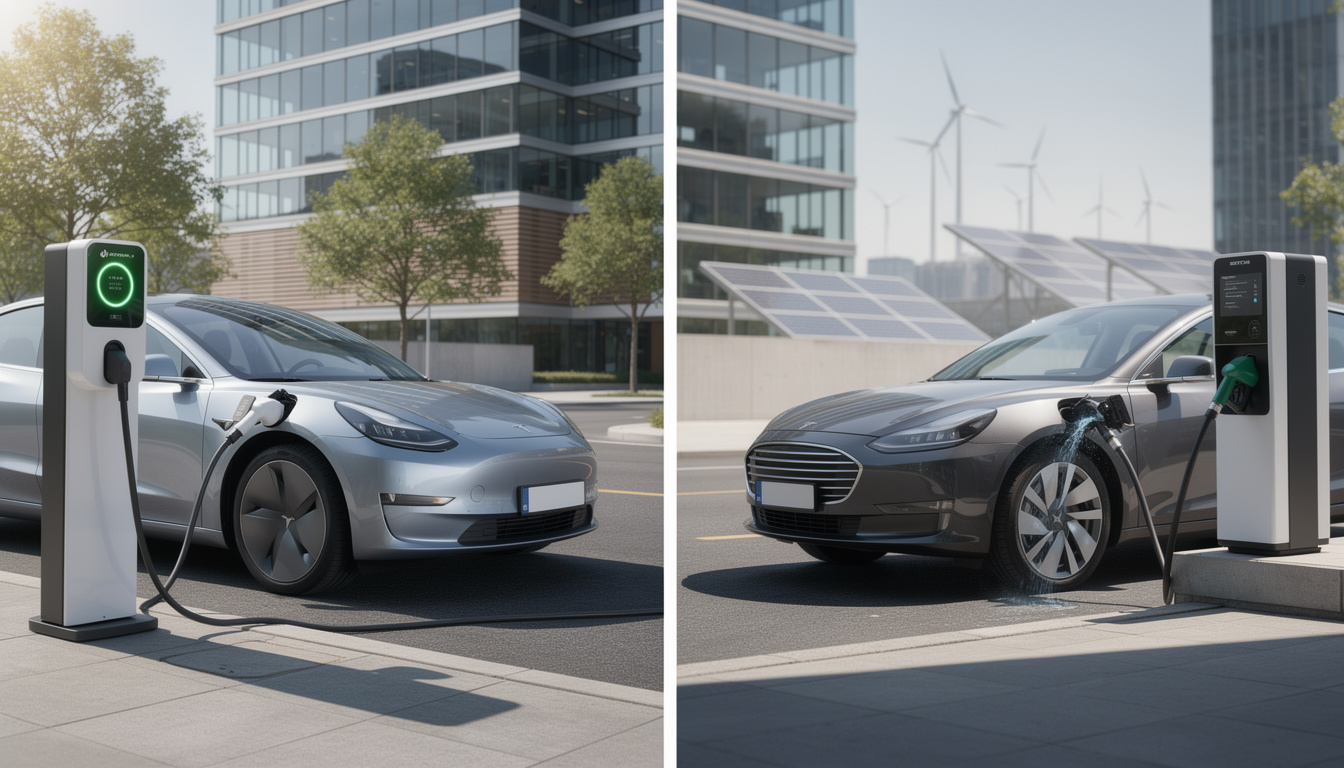
49% higher is the number that gets drivers’ attention, and in some markets it has been a real gap between EV premiums and comparable gas models. If your last renewal jumped and you assumed EVs were the whole story, look closer. Drivers shopping GEICO, Progressive, State Farm, Allstate, Liberty Mutual, Travelers, USAA, and Nationwide are running into the same problem: insurers price repair bills first, then driver behavior. This is for people who got hit with a bad renewal, a weak explanation, or a quote that made no sense on paper.
Jordan switched from a midsize sedan to an EV. Sam kept a similar gas car. Both had clean records and similar mileage, yet their prices moved in different directions after a year because claim severity, theft patterns, parts delays, and shop capacity changed faster than most drivers realize.
Why EV insurance often starts higher
EV pricing usually starts with what happens after a crash, not with the sticker on the windshield. When an EV is hit, the claim often includes specialized parts, software diagnostics, sensor calibration, and more labor hours than drivers expect. That pushes average claim severity up, even when the accident looks minor.
Jordan learned this the expensive way after a front-end hit that looked routine. The bumper didn’t look wrecked, but the final bill grew after radar alignment, camera calibration, and added diagnostic time. That kind of repair math is why many insurers still rate EVs above similar gas cars.
The gap is real, but it doesn’t move the same way everywhere
Industry datasets have widely cited EV premiums near 49% higher than comparable gas vehicles in some markets. Recent updates also show that the gap is narrowing for some models and regions as repair networks improve and more used EVs enter the pool. Both can be true at once. An EV in one metro with certified shops and better parts access can look much less risky than the same model in a thinner repair market.
That’s also why carrier differences matter so much. Progressive may like one EV model more than GEICO does. State Farm may price a zip code differently from Allstate or Travelers because each carrier is using its own claims data, repair assumptions, and appetite for that vehicle segment.
Repair costs are driving the split, not marketing claims
The strongest force behind premium changes is repair severity. EVs often bundle battery protection, structure, cameras, and other sensors into areas that used to be cheap fixes. Shops need trained techs and approved procedures, and that adds time. Time is money in claims.
Gas cars aren’t cheap to fix anymore either. Expensive headlights, infotainment screens, driver-assist hardware, and larger wheels have made “normal” repairs much less normal. Sam’s gas sedan proved that when a dashboard display issue and a windshield replacement triggered recalibration charges that looked a lot like an EV electronics repair bill.
| Claim driver | Typical pressure on EV rates | Typical pressure on gas-car rates |
|---|---|---|
| Sensor calibration | High after even minor impacts | High on many newer models |
| Battery-related inspection | Can raise labor and total-loss risk | Not usually a factor |
| Theft trends | Varies by model and area | Often a major local pricing factor |
| Parts delays | Can extend rental days | Still common on tech-heavy parts |
My view is blunt: the “gas cars are cheaper to insure, period” line is old data. New gas vehicles with advanced tech can rack up claims that look a lot like EV claims, and insurers are pricing that in. What still hurts EVs most is the risk of a higher-severity loss when batteries, underbody components, or specialized repairs are involved.
Battery packs change total-loss math
Battery packs remain a central cost driver. Even when the pack survives, insurers may pay for inspections, protective components, and specialized labor. Once damage crosses certain thresholds, an EV can tip into total-loss territory faster than owners expect. A gas car with similar cosmetic damage might still be repaired.
That difference matters more than brochure talk about low maintenance. Insurance follows claim payouts, not fuel savings. If one model line is producing bigger checks after similar crashes, the premium will move.
What insurers price before they get to you
Insurers rank vehicle risk factors like replacement cost, repairability, total-loss potential, and theft exposure before they start rewarding your clean record. If a specific EV model is more likely to be totaled after underbody damage, its rate rises. If a gas model becomes a theft magnet in your county, that rate rises too.
Jordan’s EV had strong crash ratings, but the insurer still saw elevated total-loss risk because battery damage rules can require stricter inspections. Sam’s gas car had a more modest repair profile, yet theft frequency in his zip code pushed his price up. “Safe” and “cheap to insure” are not the same thing.
State rules can distort the comparison too. California, Hawaii, Massachusetts, and Michigan restrict or ban the use of credit in auto insurance pricing, and Washington has had major legal fights over credit scoring limits as well. In those states, a bad credit-based insurance score won’t hit your quote the same way it can elsewhere, so vehicle-specific pricing can stand out more clearly. Florida is its own mess on minimums: the state minimum is 10/20/10, and that is weak coverage for anyone with income or assets worth protecting.
| Coverage choice | Low end | Stronger option |
|---|---|---|
| Collision deductible | $500 | $1,000 |
| Liability limits | State minimums like 10/20/10 in Florida | 100/300/100 or higher |
| Shop count | 1 carrier | 3 to 5 carriers |
One editorial point worth saying plainly: state-minimum liability is a bad buy for most adults with a paycheck, savings, or a house. Saving a small amount on premium and exposing yourself to a six-figure lawsuit is false economy.
Which coverage changes actually cut the bill
Coverage design matters as much as the badge on the hood. Many drivers overpay because their deductible stayed frozen while repair costs rose, or because they carry add-ons that don’t fit how they use the car. If you can absorb a higher out-of-pocket hit, moving collision from $500 to $1,000 often changes the quote faster than people expect.
Jordan raised the collision deductible and added rental reimbursement after learning that EV parts delays could keep a car in the shop longer. Sam focused more on comprehensive because local theft trends were moving faster than collision losses. Different cars, different pressure points.
- Ask whether your EV model is priced assuming OEM parts and certified repair procedures.
- Check comprehensive pricing by zip code if you drive a gas model with theft exposure.
- Review liability and uninsured/underinsured motorist limits before trimming optional coverages.
- Run quotes with at least GEICO, Progressive, State Farm, and Allstate, then add one of Travelers, Liberty Mutual, USAA, or Nationwide if eligible.
Shop every 2 to 3 years, and sooner after a sharp renewal increase. Loyalty discounts are real, but they often lose to renewal creep in the 15% to 30% range on long-held auto and home policies. If your insurer is counting on inertia, prove them wrong with competing quotes.
What your next renewal is really telling you
Rates move when insurers revise loss projections, parts prices, repair timelines, and local theft data. EV claims are getting easier to handle in regions with more trained shops, but concentrated EV ownership can still create expensive clusters after weather events or supply disruptions. Gas cars face steady pressure from labor inflation and more embedded tech, even when the drivetrain is familiar.
Jordan eventually saw his renewal stabilize when his carrier expanded its EV-certified repair network and shortened rental time. Sam saw his jump after a theft wave in his county. Those outcomes weren’t random, and they weren’t personal. They were claims trends rolling downhill into the renewal file.
Before you accept the next offer, pull your declarations page and check three items: liability limits, collision deductible, and rental reimbursement. Then get fresh quotes from at least three carriers and ask one specific question: what changed in the vehicle rating or zip-code risk since my last term? “Nothing in this article is personalized insurance advice. State laws, policy language, and your own risk profile matter. Before you buy, bind, or cancel a policy, talk to a licensed agent or independent broker in your state.”