

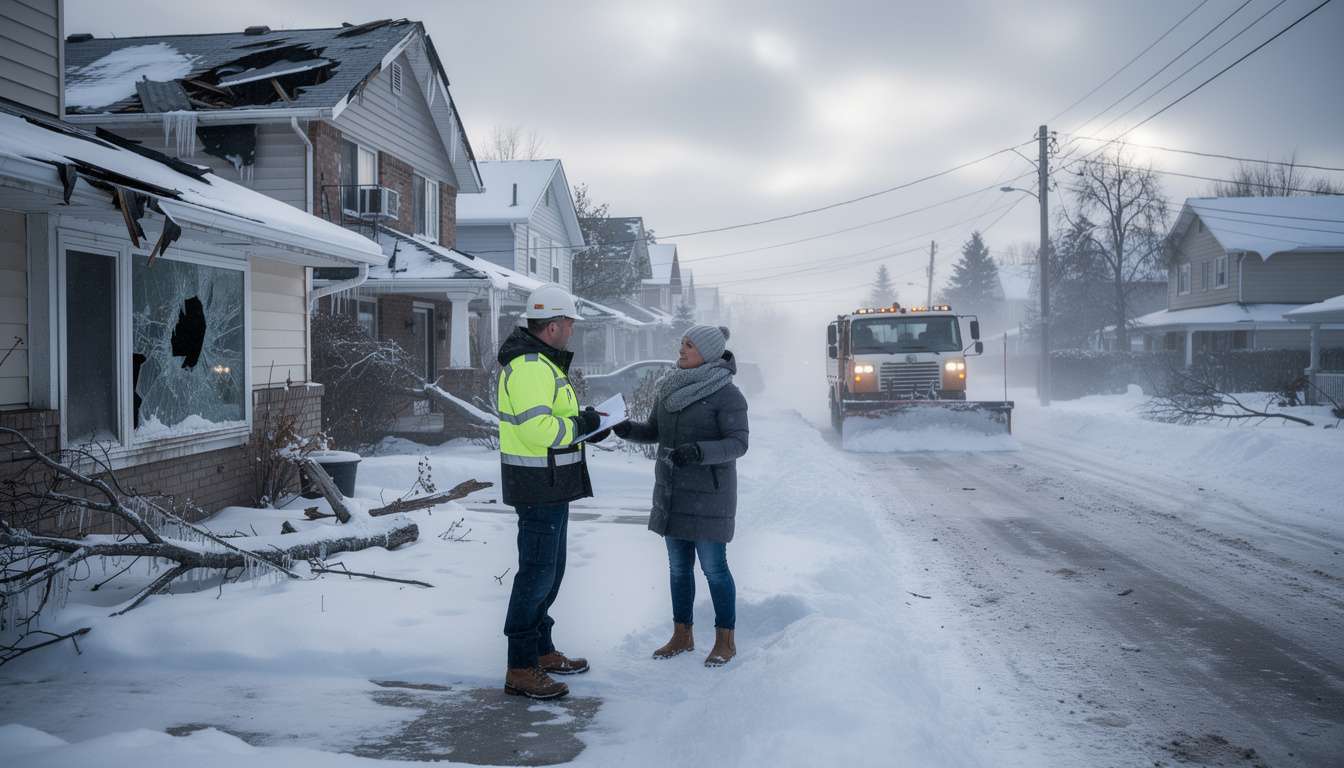
Winter Storm Damage can feel like a second disaster when the calls, paperwork, and repairs start piling up. To make this practical, follow one thread: protect the home first, document Property Damage, then handle Insurance Claims, and only after that move into Hiring Contractors while Avoiding Scams.
Winter Storm Damage: First Steps That Protect Your Claim
When the ice melts and you finally see what happened, your first goal is to prevent the damage from spreading. Insurers typically expect Emergency Repairs that stop additional harm, but they also want the original condition preserved for inspection.
Take a real-world example: after a hard freeze, “Maya” notices a ceiling stain that grows by the hour. She shuts off the water, catches drips, and covers the exposed area—small actions that can keep a minor leak from becoming a full-room restoration bill.
Emergency Repairs to Do Now (and What to Pause)
Do the fast fixes that reduce risk, then wait on permanent work until your insurer documents the loss. This sequence supports Insurance Claims and reduces disputes about what was storm-related.
- Stop water intrusion: tarp a roof, patch a temporary leak, cover broken windows.
- Reduce hazards: turn off electricity to wet areas, ventilate to slow mold growth.
- Save evidence: keep damaged materials if safe (a cracked pipe section can matter).
- Delay permanent repairs
- Track every expense: receipts for tarps, dehumidifiers, hotel nights.
This is where Safety Tips matter: if the roofline is icy or a tree is leaning, treat it like a job for professionals, not a ladder-and-hope moment.
For deeper policy and documentation guidance, see this weather damage insurance guide.
Insurance Claims: How to File Fast Without Missing Money
Speed helps, but completeness wins. File Insurance Claims as soon as you can, then supply clear documentation: wide shots of each room, close-ups of damage, and a simple written timeline of what happened and when.
Many homeowners forget to ask about “can’t live here” coverage. If the home is uninhabitable, request details on Home Insurance coverage for additional living expenses (hotel, meals above normal, temporary rentals). That one question can change your cash-flow situation overnight.
Who to Contact Immediately (It’s Not Just the Insurer)
After major winter losses, some state consumer offices advise contacting not only your insurer but also financial partners who can pause or restructure payments. In practice, that means calling your Home Insurance carrier, your mortgage lender, and relevant credit card companies to discuss hardship options while repairs and inspections are pending.
Think of it as Storm Preparedness after the fact: stabilizing finances is what keeps a repair project from becoming a long-term debt problem.
To build a simple financial checklist for disasters, use this financial preparedness resource.
Hiring Contractors: Safer Selection After Winter Storm Damage
When neighborhoods are hit together, good crews book out fast—and that’s exactly when risky operators show up. Smart Hiring Contractors isn’t about the fastest “yes,” it’s about proof, paper, and protection.
Case in point: “Maya” gets a knock from a team offering same-day roof work, cash-only, “discount if you sign now.” That urgency is the trap. Reputable pros can be busy, but they won’t require panic decisions.
Contractor Verification and Red Flags You Should Treat as Dealbreakers
Start with Contractor Verification using your state’s official license lookup tools where available. Then apply a simple test: would this agreement hold up if something goes wrong?
- Door-to-door pitches right after a storm with “today only” pressure.
- Full payment upfront or demands that skip normal milestones.
- Cash-only insistence, especially paired with no written terms.
- No written contract that defines scope, materials, timeline, and change orders.
- Unclear insurance (they can’t show liability coverage documentation).
If debris removal or tree work is involved, confirm the right coverage is in place. Practical minimums often include general liability (if a limb hits your house) and workers’ compensation (if a worker is injured on your property). That paperwork is not bureaucracy; it’s protection.
For additional scam patterns seen after cold-weather events, review these storm scam avoidance tips.
Avoiding Scams: The Tricks That Hit Hardest After Storms
Avoiding Scams is easiest when you assume scammers will mimic authority. Common angles include people posing as government workers, “aid processors,” or charities with names that sound almost official.
A simple safeguard works every time: if someone claims to represent an agency, hang up and call the agency directly using its official public number. Scammers rely on you staying in the same conversation where they control the story.
Price Gouging and Fake Help Fees
After widespread storms, some sellers dramatically raise prices on essentials or “fast-track services.” Treat two practices as immediate warnings: upfront fees to access government benefits, and “limited-time” offers that require instant payment before any work starts.
If you see suspicious behavior, many states allow consumer reports online through their official portals. The key is to document names, phone numbers, truck markings, and any written materials—those details make enforcement possible.
Storm Preparedness You Can Do While Repairs Are Pending
Even mid-rebuild, you can reduce the next round of Property Damage. Clear gutters, keep indoor heat consistent to protect plumbing, and remove risky limbs with qualified help—small steps that lower repeat losses while your claim is still in motion.
If you want a structured cold-season plan, use these winter insurance strategies to tighten coverage and prevention habits before the next freeze.
What should I do first after Winter Storm Damage?
Start with Safety Tips and loss prevention: shut off water if pipes may be broken, avoid downed lines, and perform Emergency Repairs like covering openings or tarping leaks. Then document everything with photos/video before major cleanup.
How do I strengthen Insurance Claims for winter Property Damage?
File promptly, provide a clear timeline, submit wide and close-up photos, and keep receipts for all temporary fixes and extra costs. Ask your Home Insurance carrier about additional living expenses if the home isn’t livable.
What are the biggest risks when Hiring Contractors after a storm?
The biggest risks are unlicensed work, no written contract, cash-only demands, and high-pressure tactics. Prioritize Contractor Verification through official tools where available, and require clear scope, payment milestones, and proof of insurance.
How can I avoid common post-storm scams?
Avoiding Scams starts by refusing urgency. Don’t pay upfront “processing fees” for government help, verify anyone claiming to be an official by calling the agency directly, and be cautious of charity names designed to look official.