

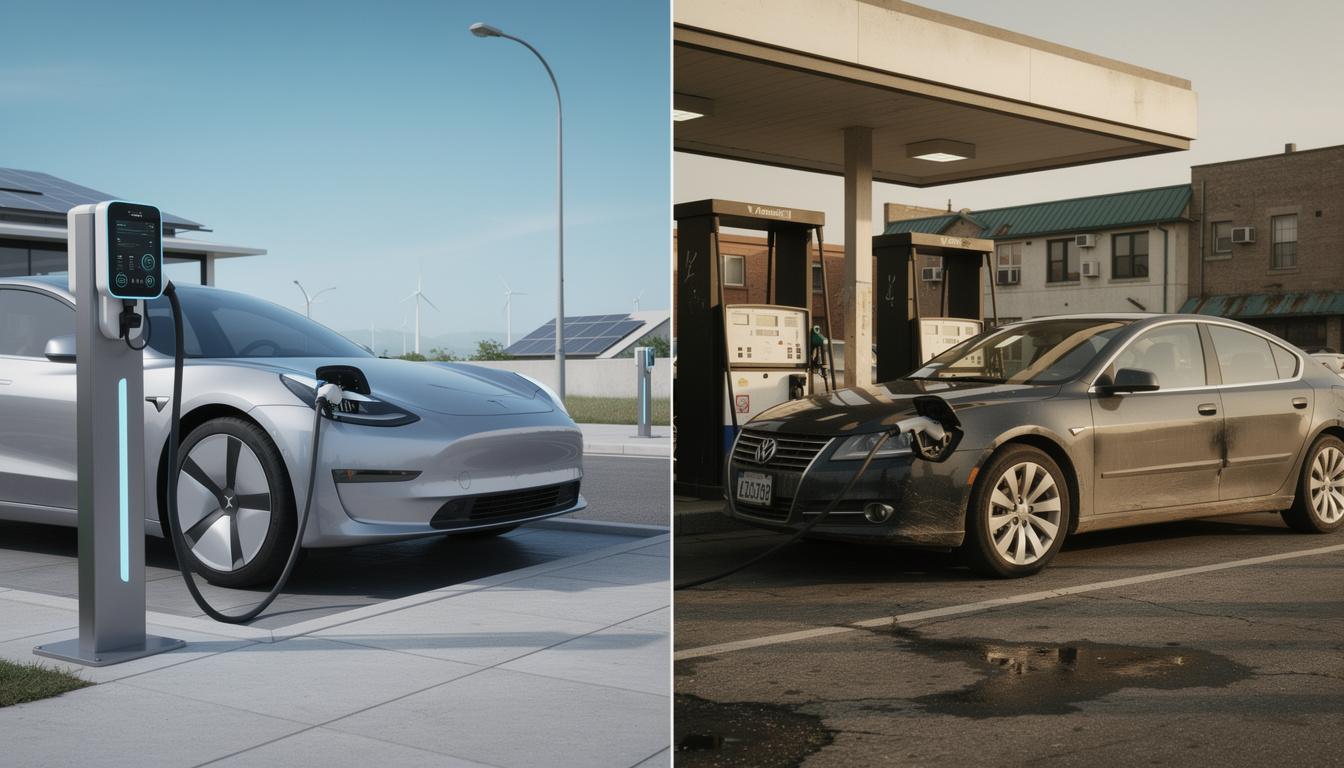
Insurance quotes are shifting in ways drivers feel month to month. Electric Vehicle Insurance is no longer a niche line item, and Gas Car Insurance is no longer the default baseline for pricing. In 2026, insurers price risk with tighter data loops, pricier parts, and longer repair cycles. So Insurance Premiums move faster, even when your driving habits stay the same.
The EV vs Gas Car debate often starts with fuel savings, then ends with a surprise renewal. Electric Vehicle Premiums often run higher because batteries, sensors, and software push up claim severity. Gasoline Car Premiums often look calmer, yet rising labor costs and theft patterns still reshape rates. If you want an honest Insurance Cost Comparison, you need to look at repairs, total-loss rules, safety tech, and how insurers perform Insurance Risk Assessment across your zip code.
Meta description: Electric Vehicle Insurance vs Gas Car Insurance in 2026: learn why Insurance Premiums are changing, compare Electric Vehicle Premiums and Gasoline Car Premiums, and save.
Electric Vehicle Insurance vs. Gas Car Insurance: what changed in pricing
Electric Vehicle Insurance pricing moved because insurers now pay more per claim, not because EV drivers are worse drivers. Electric Vehicle Premiums rise when a single impact triggers sensor calibration, battery inspection, and longer shop time. Gas Car Insurance pricing moved too, but the big swing for many drivers comes from EV claim costs.
Recent industry comparisons used by carriers show a clear gap: EV monthly averages around $357 versus about $248 for gas vehicles, a difference near 44%. Those numbers vary by model and state, yet they explain why Vehicle Insurance Changes feel sudden. The insight is simple: your premium follows the cost to put your car back on the road.
Auto Insurance Trends pushing Insurance Premiums up for both types
Auto Insurance Trends now reflect supply chain timing, shop labor rates, and complex vehicles across the board. Even Gas Car Insurance gets hit when bumpers include radar modules and headlights include cameras. The old idea of “simple repair” keeps shrinking.
Insurers react by refining Insurance Risk Assessment with more granular pricing. Your location, theft frequency, and repair network access can shift your Insurance Premiums without any ticket or accident. If you want a practical baseline for rate tactics, start with these car insurance cost strategies and apply them before you shop quotes.
Electric Vehicle Insurance costs: why Electric Vehicle Premiums often run higher
Electric Vehicle Insurance tends to cost more because EV claims are larger and take longer to close. Many EV repairs require brand-certified shops, special lifting procedures, and scan tools tied to the manufacturer. When your car sits in a shop for weeks, insurers also pay more in rental coverage.
Electric Vehicle Premiums also reflect higher vehicle values. Even with incentives, many EV trims cost more upfront than a comparable gas model. Higher values increase collision and comprehensive limits, so Insurance Premiums climb with the sticker price.
Battery risk drives Insurance Risk Assessment in Electric Vehicle Insurance
The battery pack is the cost center in many EV claims. A small underbody strike can lead to a battery replacement decision, and the bill can reach thousands. Insurers price that battery exposure into Electric Vehicle Insurance from day one.
Here is how the EV vs Gas Car risk logic plays out in the real world. A commuter in Phoenix clips road debris on the highway, and the shop flags potential battery housing damage. The insurer weighs repair cost versus total-loss thresholds, and Electric Vehicle Premiums reflect that higher-stakes decision path.
Gas Car Insurance costs: why Gasoline Car Premiums still move
Gas Car Insurance often looks cheaper because parts are abundant and more shops handle repairs. Gasoline Car Premiums also benefit from decades of claims history, which stabilizes pricing models. For many mid-range sedans, the Insurance Cost Comparison still favors gas.
Yet Gas Car Insurance is not protected from modern claim inflation. Cars with advanced driver assistance systems still need recalibration after a minor crash. Add rising theft of popular models in some metro areas, and Gasoline Car Premiums move faster than drivers expect.
When Gas Car Insurance loses the price advantage in an EV vs Gas Car quote
Gas Car Insurance can cost more than Electric Vehicle Insurance when the gas vehicle is older and lacks safety tech. Insurers often price higher injury risk when crash avoidance features are missing. A newer EV with strong crash ratings can win on bodily injury exposure even if its repair costs are higher.
This is why EV vs Gas Car shopping needs model-level detail. Two neighbors with the same driving record can see opposite outcomes because one drives a base gas crossover with few safety features, while the other drives an EV trim with standard automatic braking. Insurance Premiums follow expected losses, not opinions.
Insurance Cost Comparison: the factors insurers price for EV vs Gas Car
A fair Insurance Cost Comparison starts with what insurers pay after a claim. Electric Vehicle Insurance often rises on severity, while Gas Car Insurance often rises on frequency in high-theft areas. When you understand the pricing levers, you shop smarter and avoid coverage gaps.
Use this checklist before you accept a quote, and apply it to both Electric Vehicle Insurance and Gas Car Insurance. Each item links directly to Insurance Risk Assessment and Vehicle Insurance Changes.
- Vehicle value and trim: higher replacement cost raises comprehensive and collision for Electric Vehicle Premiums and Gasoline Car Premiums.
- Repair network access: fewer certified EV shops often means longer downtime and higher claim totals.
- Parts pricing: cameras, sensors, and LED assemblies increase costs for both EV vs Gas Car claims.
- Battery exposure: underbody damage drives Electric Vehicle Insurance pricing.
- Theft and vandalism patterns: location shifts Gas Car Insurance and Electric Vehicle Insurance in different ways.
- Mileage and driving times: low mileage helps, especially with usage-based programs tied to Auto Insurance Trends.
If you live in a no-fault state, your Insurance Cost Comparison also needs policy structure detail, not only the car type. Review this Michigan auto insurance benefit guide as a template for what to check in your own state rules. The takeaway is clear: policy design can swing your Insurance Premiums as much as the vehicle choice.
Vehicle Insurance Changes you can control: steps to reduce Insurance Premiums
Vehicle Insurance Changes feel imposed, yet you still control key inputs. Start by aligning coverage with your real risk, then shop with clean documentation. Insurers reward consistency and clear signals in Insurance Risk Assessment.
Use these actions for Electric Vehicle Insurance and Gas Car Insurance, then re-quote once you apply them. Each step supports a measurable reduction path, not vague advice.
- Re-shop at renewal: run an EV vs Gas Car quote check across at least three carriers to capture rate differences.
- Adjust deductibles with intention: move deductibles only if your emergency fund supports the change.
- Ask for safety and telematics credits: advanced braking and low-mileage patterns often reduce Insurance Premiums.
- Protect the car: secure parking and tracking features reduce comprehensive risk for Electric Vehicle Premiums and Gasoline Car Premiums.
- Bundle smartly: home and auto bundling often reduces total spend, if coverage stays aligned.
If you want a broader approach that connects home and auto decisions, follow these home and vehicle insurance tips. The argument is simple: carriers price you as a profile, so consistent risk management helps across policies.
Our opinion
Electric Vehicle Insurance and Gas Car Insurance are converging on one reality: Insurance Premiums track claim cost, repair time, and medical exposure. Electric Vehicle Premiums stay elevated where battery risk and certified repair limits drive severity. Gasoline Car Premiums rise where theft, dense traffic, and sensor-heavy repairs increase frequency and cost.
If you treat EV vs Gas Car as a simple fuel debate, you miss the Insurance Risk Assessment behind Vehicle Insurance Changes. Build your own Insurance Cost Comparison, challenge the quote line by line, and share what you see in your market. Your experience helps other drivers spot patterns inside today’s Auto Insurance Trends.
Is Electric Vehicle Insurance always higher than Gas Car Insurance in 2026?
Electric Vehicle Insurance is often higher because Electric Vehicle Premiums reflect battery and tech repair severity. Gas Car Insurance can still exceed it for high-theft models or older cars with weaker safety scores, so the EV vs Gas Car result depends on the vehicle and your location.
What is the biggest reason Insurance Premiums changed for EV vs Gas Car policies?
Insurance Premiums changed because claim costs increased, especially for EV repairs tied to batteries, sensors, and longer shop cycles. This shifts Insurance Risk Assessment and drives Vehicle Insurance Changes across carriers.
How do I run an Insurance Cost Comparison for Electric Vehicle Premiums and Gasoline Car Premiums?
For an Insurance Cost Comparison, compare the same coverage limits, deductibles, and add-ons for Electric Vehicle Insurance and Gas Car Insurance. Then check expected repair costs, theft exposure, and safety tech because those factors drive Electric Vehicle Premiums and Gasoline Car Premiums.
Do safety features lower Electric Vehicle Insurance and Gas Car Insurance rates?
Safety tech often lowers Insurance Premiums when insurers see lower injury risk and fewer severe crashes. It helps Electric Vehicle Insurance and Gas Car Insurance, and it plays into Auto Insurance Trends as carriers price advanced driver assistance systems more explicitly.
What should I ask my insurer to understand Vehicle Insurance Changes on my renewal?
Ask how your insurer’s Insurance Risk Assessment changed for your zip code, your model, and your annual mileage. Also ask which discounts apply to Electric Vehicle Insurance or Gas Car Insurance, since telematics and safety credits can reduce Insurance Premiums.